
Tankless Water Heater Installation in Maryland: Is Upgrading Worth the Cost for Your Home?
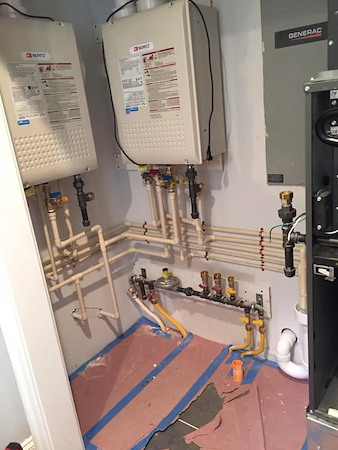
Thinking about a tankless water heater for your Maryland home? This guide gives you a clear, data-driven look at how our colder winter groundwater changes the sizing math, how BTU output and flow rate work together, and where state and utility rebates can help. If you want help right away, our team at Chucks Plumbing LLC handles tankless water heater installation and repair across Maryland with right-sized systems and careful workmanship.
How Maryland’s Cold Groundwater Changes The Math
In winter, Maryland’s incoming water at the tap often arrives in the 40s to low 50s Fahrenheit. That colder starting point means a tankless unit must work harder to raise water to a comfortable 120°F, especially when more than one fixture is running. The key variable is temperature rise, often written as ΔT.
Two numbers drive your experience:
- ΔT: the difference between your set temperature and incoming water. Example: 120°F setpoint minus 42°F inlet equals 78°F rise.
- Flow rate: how many gallons per minute your home wants at peak, like a shower plus a sink running together.
For quick planning, use this rule of thumb: BTU per hour ≈ 500 × GPM × ΔT. So if a shower at 2.5 GPM and a sink at 1.0 GPM run at once in January, that is 3.5 GPM × 78°F × 500 ≈ 136,500 BTU/hr. Add a second bath or a filling tub and the requirement jumps fast. This is why sizing strictly by number of bathrooms can disappoint in winter.
Sizing 101: BTU, Flow Rate, And Temperature Rise
Think of a tankless heater like a funnel with a burner. The burner size is BTU/hr. The funnel opening is flow rate. The colder the water, the more burner you need to keep the same flow warm.
Simple checkpoint you can use with any brand:
Step 1: List your most likely two concurrent fixtures in winter. Many homes plan around a shower plus a kitchen or bath sink.
Step 2: Estimate flow. Modern shower heads are usually 2.0 to 2.5 GPM. Faucets are commonly 1.0 to 1.5 GPM.
Step 3: Use BTU ≈ 500 × GPM × ΔT with ΔT based on a 40s°F inlet in January and a 120°F setpoint. Round up to protect performance.
If the math says you are right on the edge, consider a slightly larger unit or a secondary point-of-use solution near the heaviest demand. A bit of headroom now avoids lukewarm showers when everyone is home for the holidays.
Tankless Vs. Tank: What Fits A Maryland Home
Traditional tank heaters store hot water and keep it warm all day. A tankless heats only when you open a tap. Here is how that plays out for Maryland households:
- Comfort: Tankless can deliver long, steady showers within its rated flow. Tanks can run out during back-to-back use.
- Energy: No standby heat loss with tankless. Tanks keep reheating stored water even when you are sleeping or at work.
- Space: Tankless units mount on the wall and free floor space in tight basements, rowhomes, and townhomes.
- Longevity and care: Tankless often lasts longer with light annual service. Tanks have simpler parts but a shorter typical life.
If you want a deeper comparison, see our local explainer on tank vs. tankless for Maryland homes and how real fixtures, winter inlet temperatures, and usage patterns guide the choice.
Local tip: Maryland’s cold snaps can push inlet temperatures lower than you expect. Plan your tankless size for January, not July. A modest safety margin keeps showers steady during holiday mornings and snow days.
Real-World Scenarios Across Maryland
One-bath condo in Towson or Silver Spring. A single shower at 2.0 GPM with light kitchen overlap can be a good match for a compact tankless if venting and gas or electrical service fit. Space savings matter in utility closets and tight basements.
Three-bed townhome in Perry Hall or Germantown. Two showers rarely run full-blast at the same time, but a shower plus a faucet is common. A mid to larger unit sized for a 70 to 80°F winter rise keeps comfort steady.
Four-bed single family in Howard or Anne Arundel County. Morning peaks and weekend laundry can stack demand. Some families choose a high-capacity tankless. Others add a small secondary unit near a remote bath to reduce wait time. A right-sized plan beats any one-size recommendation.
Energy Use, Rebates, And Long-Term Savings In Maryland
Many Maryland utilities offer incentives through EmPOWER Maryland for efficient water heating upgrades. Heat pump water heaters often qualify for instant discounts at participating retailers or contractor-installed rebates. Some gas utilities also offer rebates for high-efficiency gas or tankless models. Federal tax credits may be available for qualified heat pump water heaters when installed in your residence. Programs change, and amounts vary by utility and year, so always verify current details with your provider before you buy.
Where to check:
- Your electric utility’s EmPOWER page for current water heater incentives and eligibility.
- Your gas utility for any tankless or high-efficiency gas water heater rebates.
- Federal guidance on energy-efficient home improvement credits for qualified equipment.
When upgrades lower standby losses or improve efficiency, monthly energy bills can trend down over time. Actual savings depend on usage, energy rates, and how often you run simultaneous hot water fixtures in winter. The space you reclaim from a wall-mounted unit is a bonus you feel every day.
Installation Details That Protect Performance
Tankless units are compact, but the installation is detailed. Performance and safety depend on the whole system, not just the box on the wall.
Gas capacity and pressure. Many whole-home gas tankless units need a larger gas line than a 40 or 50 gallon tank used before. If your line is undersized, winter demand from a furnace plus a tankless can cause flame flutter and lower output. If you are upgrading or adding appliances, see our overview of gas line upgrades that keep pressure where it belongs.
Venting and condensate. High-efficiency gas tankless models vent differently than old atmospherically vented tanks. They also produce acidic condensate that must be drained and often neutralized before it enters older drains. Proper routing protects your home and plumbing.
Water quality and maintenance. Hard water leaves scale that can reduce heat transfer and flow. A quick annual flush and a simple scale filter keep performance stable.
Prefer to hand off the planning? Chucks Plumbing LLC designs, installs, and services right-sized systems with careful attention to venting, gas or electric requirements, and code. Explore our approach to tankless water heater installation and repair for more details.
When A Traditional Tank Still Makes Sense
Some homes are better served by a modern storage tank. If your gas line or electrical service cannot support a whole-home tankless without major upgrades, a high-quality tank may be the better near-term move. If your household rarely overlaps hot water use, the comfort advantage of tankless may be small. Tanks also make sense where venting routes are limited or where a future remodel will change demand soon.
Not sure which path is right? A quick site visit lets us test flow at key fixtures, measure available gas or electrical capacity, and give you a clear recommendation. If your current tank is close to the end, our team also handles water heater replacement with a plan that protects comfort through winter.
Frequently Overlooked Details In Maryland Homes
Set realistic expectations in January. Size for a 70 to 80°F rise when you do the BTU math. That is the cold-month reality in much of the state.
Think about the whole morning peak. Consider showers, sinks, and laundry patterns. If you are often running two fixtures at once in winter, build in headroom.
Plan venting and condensate routes during a remodel. It is easier to set clean paths when walls are open. A compact, wall-hung unit can free the floor for storage or a workbench in tight basements and rowhomes.
The Bottom Line For Maryland Homes
Tankless systems can be a smart upgrade in Maryland when they are sized for winter inlet temperatures, installed with the right gas or electric capacity, and paired with simple annual care. You gain steady comfort, reclaim space, and often reduce energy waste from standby heating. Traditional tanks remain a good fit for lighter hot water use, constrained venting, or near-term budgets.
If you want a quick, expert read on your home, you can start with our tankless water heater installation Maryland overview and schedule a sizing visit. We will map your peak flow, confirm capacity, and provide clear options tailored to your fixtures and routines.
Ready To Right-Size Your Hot Water In Maryland?
Talk with a licensed pro who understands how our winter groundwater affects real-world comfort. Call Chucks Plumbing LLC at 410-937-2558 or request an appointment today. We install and service systems built for Maryland homes and seasons, and we will guide you through utility rebates and simple maintenance so your upgrade pays off for years.